PART III: Liminal Spaces: Contextualizing the Artistic Phenomenon
Silence, the space that frightens and captivates… At the back of my nights, God, with his wise finger, traces a multiform and unrelenting nightmare.
I fear sleep as I would an enormous hole, filled with vague horror leading I know not where; I see only infinity through every window.
And my spirit, forever obsessed with vertigo, envies the insensibility of nothingness.
Ah! And to be unable to flee from Being and Numbers!
— Charles Baudelaire1
Liminal spaces emerged as an avant-garde artistic phenomenon born on the margins of the Internet. Their first appearance dates to 2019, through forums such as Reddit and 4chan, which enabled the emergence of an entire subculture centered on the sharing of images displaying a common set of characteristics.2
Liminal spaces belong to what is known as social media art3—a form of net.art—and constitute an Internet aesthetic4 that depends exclusively on social media for its production and dissemination. These Internet aesthetics are characterized by anonymous authorship—at most, the creator’s username may be known—and by the universalization of artistic production. In practice, anyone can contribute to the creation of such content: one simply needs to produce images that conform to the style and publish them on a social network.
Given the novelty and marginality of this artistic phenomenon, academic literature on the movement is virtually nonexistent. For this reason, most of the relevant information concerning the aesthetic is currently found online. Consequently, the principal sources we will draw upon to gather information and select images will come from those Internet communities that made the emergence of the movement possible.
The aesthetic of liminal spaces originated in May 2019 with a thread on the popular general-interest forum 4chan. In that thread, a user asked others to submit “unsettling images that feel ‘out of place.’”5 Following this request, users began posting all manner of images: abandoned places, deserted roads, gloomy sites, and so forth.
To open the thread, the user uploaded an image (see Figure 1). In response to this image—the one that set everything in motion—an anonymous user creatively invented a context for it, giving rise to the urban legend of the Backrooms:
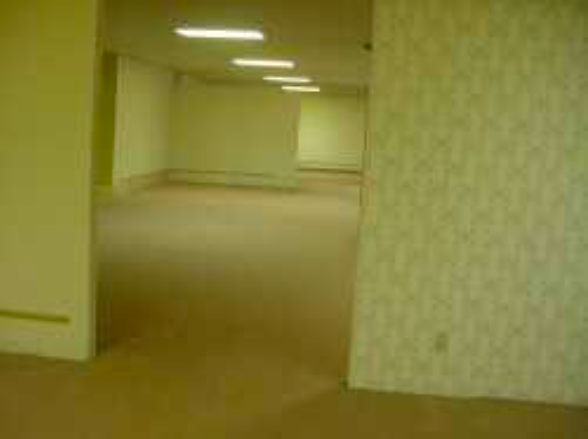
Figure 1. Origin of the Backrooms, Anonymous.6
If you’re not careful and you noclip out of reality in the wrong areas, you’ll end up in the Backrooms, where there is nothing but the stench of old, damp carpet, the madness of monochrome yellow, the endless background noise of fluorescent lights at maximum hum, and approximately six hundred million square miles of randomly segmented empty rooms in which to become trapped. God save you if you hear something wandering around nearby, because it has surely heard you.7
Following this comment, virality was immediate. It gave rise to a horror story8 that was continually expanded by the online community: discussions about the story, new levels of the Backrooms, and all manner of continuations of the myth spread rapidly. An entire community emerged from the creative power of the event: the power of an image and a comment about it.
What we have just described, however, is specifically the origin of the Backrooms, a subculture that emerged from this event and subsequently expanded in other directions. We have discussed the Backrooms because this image sparked the subculture of liminal spaces.
This first image established certain central elements of liminal spaces. However, the narrative surrounding it and the direction taken by the Backrooms phenomenon ultimately diverge from liminal spaces, insofar as liminal spaces are not accompanied by a story that provides them with context. They consist solely of the evocative power of images of spaces that have been completely stripped of context.
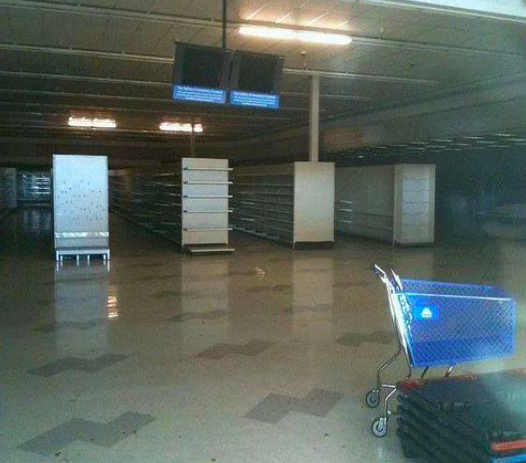
Figure 2. Liminal Supermarket Space, Anonymous.9
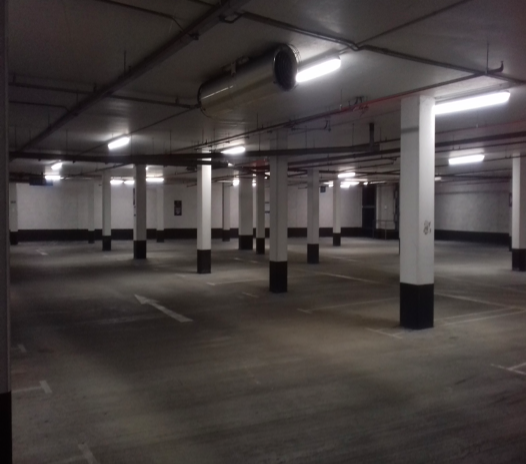
Figure 3. Liminal Garage Space, Anonymous.10
Liminal spaces emerged from the first image we have examined, although they subsequently rework its forms, play with the spaces we inhabit under late capitalism, and compel us to question ourselves.
The question arises when we find ourselves immersed in an environment that is at once strange, familiar, comforting, and frightening. We cannot quite determine why it produces these effects in us; moreover, this bewilderment emerges in spaces that differ radically in terms of their identity and function.
With this in mind, attempting to categorize and define what liminal spaces are is a difficult task, one that is never free from debate and possible exceptions. Starting from this premise, members of the r/LiminalSpace community on Reddit—the principal community for the production, dissemination, and discussion of liminal spaces—debate certain aspects and offer different interpretations in an attempt to understand this artistic phenomenon more deeply.
As we have noted, this is a phenomenon arising from the creative and polymorphous capacities of those who continually update and participate in it. It therefore has no previously established status.
One example can be found in a highly popular thread entitled Can Someone Explain Liminal Space Like I’m 5?, in which a large number of users offered their views and interpretations of liminal spaces.
Among the more compelling examples, the user VoloxReddit offered the following explanation, which received considerable approval from the community:
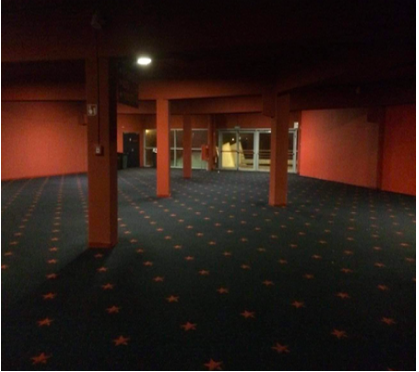
Figure 4. Liminal Cinema Space, Anonymous.11
Liminal spaces are usually familiar-looking spaces associated with a particular function and/or setting, but encountered in a new or unfamiliar context. A city with no people. Your childhood home after you have packed everything up and moved it to your new house. Your school after everyone has left. Empty market stalls, closed for the night, with no customers in sight. An empty parking lot outside a shopping mall. There is always something familiar about these places, but at the same time they seem alien and strange because they have been removed from the context in which we are accustomed to seeing them.
Being in these spaces can be both unsettling and strangely exciting. Liminality has more to do with the emotional reaction to the spaces in question. It feels otherworldly and familiar at the same time. That is a liminal space.12
Although this comment may help provide an initial understanding of the phenomenon of liminal spaces, the following section will attempt to characterize it as rigorously as possible, drawing on a range of sources and seeking common patterns that might situate this aesthetic within a set of robust criteria.
This will subsequently allow us to distinguish more effectively those Internet aesthetics that depart from liminal spaces by emphasizing certain aspects over others.
1. Characteristics of Liminal Spaces
“Today and tomorrow, capitalism lives everywhere, in our televisions, phones, and minds, but nowhere is it more sacred than in the gleaming temples of its interface with the public: the office lobby, the hotel reception area, and, above all, the shopping mall.”
— D. Harper13
Because it is sometimes difficult to distinguish what is and is not a liminal space, we must be careful when establishing the coordinates that delineate liminal spaces. Some cases may be ambiguous and, as noted above, even within the communities themselves there are disagreements about what determines whether an image qualifies as a liminal space.
It is therefore important to emphasize that, given the way this artistic phenomenon is constituted, the characterization of liminal spaces depends on the precedents established by the communities that regulate their content and contribute to the formation of this aesthetic. Many images share characteristics with liminal spaces without ultimately qualifying as such. Although they may share a common thread, there are numerous related aesthetics that also possess overlapping characteristics. These aesthetics can nevertheless be distinguished from one another—an issue we will address in the following subsection—by emphasizing certain aspects over others.
Thus, it is essential to note that, from its beginnings, the aesthetic of liminal spaces has been difficult to delineate, since not everything that appears to be a liminal space actually is one. By identifying its distinctive and differentiating features, however, we can understand certain fundamental characteristics at the theoretical level. Through an analysis of these distinguishing traits, we can see more clearly what liminal spaces are and, in turn, distinguish them from what they are not.
First, liminal spaces are characterized by the complete absence of people.14 The aesthetic of liminal spaces is permeated by an overwhelming sense of solitude on the part of the viewer (see Figures 5 and 6); it can even seem as though the photograph was not taken by a person at all, as if it had been captured by some unknown mechanism and delivered to us as a message from elsewhere—like a bottle washed ashore.
This sensation of solitude encourages the viewer to experience the image as though occupying the position of a third-person observer. The viewer’s solitude, together with the absence of people, sustains that strange lack of context that generates estrangement from both the place and oneself. Moreover, because of the editing, the images tend to evoke a dreamlike quality intertwined with the familiarity of the photographed location. It is as though it were a place one might have visited before, yet one that becomes unsettling because of its manifest sense of unreality.
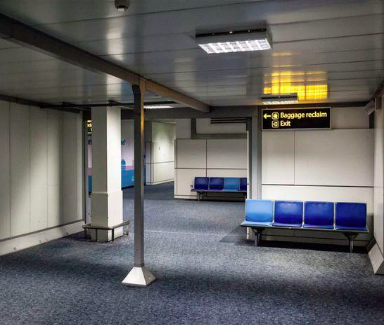
Figure 5. Liminal Airport Space, Anonymous.15
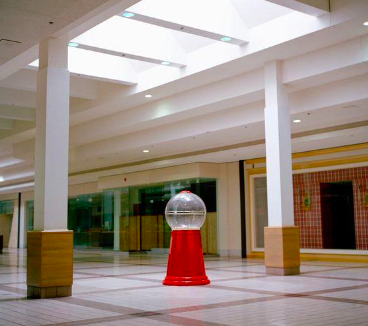
Figure 6. Liminal Shopping Mall Space, Anonymous.16
Second, liminal spaces are places that are ordinarily traversed by people. They are places made by and for people, specifically designed to satisfy human needs, characteristic of Westernized societies and directly connected to the cultural logic of late capitalism. The sense of estrangement produced by these spaces derives precisely from the astonishment of finding them completely empty.
This phenomenon is closely related to a term conceptualized in recent years: kenopsia. According to The Dictionary of Obscure Sorrows17, kenopsia is defined as follows:
The eerie, forlorn atmosphere of a place that’s usually bustling with people but is now abandoned and quiet—the school hallway at night, an unlit office on the weekend, vacant fairgrounds—an emotional afterimage that makes it seem not just empty but hyperempty, with a total population in the negative, so conspicuously absent it glows like a neon sign.18
As we can see, the concept of kenopsia captures with remarkable precision the sensation produced by liminal spaces: an atmosphere of emptiness and silence, a place one would expect to be filled with people. All of this occurs within the coldness of a space characterized by transit, a place that does not invite one to remain.
Third, and in connection with the previous point, liminal spaces—as their name suggests—are characterized by liminality.19 Constitutively, liminal spaces are places designed to be traversed; their function is to serve as means for reaching other places.
They are places designed for movement, for going from one point to another. They are not places one would visit for the enjoyment of the place itself. They are arranged as means rather than ends. Airports, shopping malls, supermarkets, hallways, garages, and so forth are all spaces distinguished by their transitional character because people go there for some other reason.
No one goes to a supermarket or a garage for the pleasure or singularity of the place itself. Nevertheless, it is important to emphasize that the mere fact that a location is a transitional space does not automatically make it a liminal space. Certain conditions, such as those identified above, must be present.
The guidelines of the Reddit community r/LiminalSpace state:
In practice, therefore, liminality is not simply transition in one sense. A road is inherently transitional, but not every photograph of a road is liminal. Only when several transitional qualities are combined does a space become liminal. Liminality in photography and other media revolves around the sensation of remaining in a region or state that one would normally pass through without giving it a second thought. People pass through airport corridors in an instant, so remaining in them would be unfamiliar and almost incorrect; but because one lives in the rooms and hallways of one’s own home, there is no such unfamiliarity, which removes the deeper element of transition.20
Thus, the liminality of a space is not based solely on its being a place of passage. Liminality implies a transition, a threshold at which one’s stay is brief and transitory.
When referring to the concept of liminality, we must return to its origins. Victor Turner was the anthropologist who developed the concept of liminality in depth—although it was initially formulated by Arnold van Gennep—through his studies of the Ndembu people of Africa. The anthropological concept seeks to capture the ambiguity of certain ritual phases in which an individual occupies a position between one point and another in a given social and existential status:
“Liminality,” as a sociologically useful concept, denotes the intermediate phase of any ritual process that, following Van Gennep, can be divided into three analytically distinct phases and in which an individual moves from one social status to another—for example, classically, from being a child to becoming an adult man, or from being a girl to becoming a woman (as in what are known as initiation rites). During the intermediate phase of a process, the individuals involved are understood to be “no longer” and, at the same time, “not yet.” It is therefore an ambiguous phase.21
As we can see, the anthropological concept of liminality records this ambiguous status, this intermediate point at which one is “no longer” one thing but has “not yet” reached another social stage. Liminal spaces, for their part, are places that, beyond being encoded with specific functions, share the fact of being profoundly liminal.
Their distinctive feature lies precisely in their function as passages, in being situated between one point and another. If we take the elements identified above into account, we can better understand how liminal spaces are capable of catalyzing a wide variety of contradictory sensations.
Fourth, and in relation to the foregoing, one of the decisive characteristics of liminal spaces is the particular ambivalence of the emotions they evoke: a broad, contradictory, and polarized spectrum.
Beyond each individual’s personal and subjective interpretation, images of liminal spaces tend to polarize the range of sensations they provoke. Some images may incline toward discomfort and the uncanny, while others may be deeply peaceful and warm. Nostalgia and a sense of belonging are also frequently present in these images.
Of course, they may often appear trivial and bland; conversely, they can also be deeply inspiring and fascinating. It might initially seem obvious—or even absurd—to focus on the emotions they evoke. Yet this is not irrelevant, since liminal spaces function as an overwhelming machine for evoking contradictory and intensely felt emotions.
This may also account for the popularity of this artistic phenomenon throughout cyberspace,22 since, as we have shown, these images can produce nostalgia, kenopsia, uncertainty, peace, unease, and many other related sensations. As Jake Pitre puts it:
A liminal space can be a place one imagines dreaming about or seeing on television. It can be tinged with tragedy or be inexplicably sad in its everydayness. Liminal spaces can be comforting and uncomfortable, nostalgic and unsettling, intimate and unnatural.23
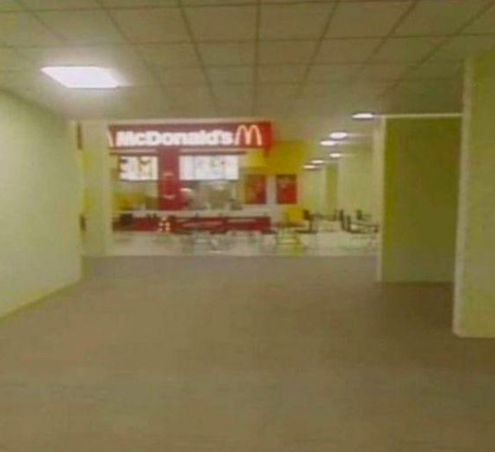
Figure 7. Liminal McDonald’s Space, Anonymous.24
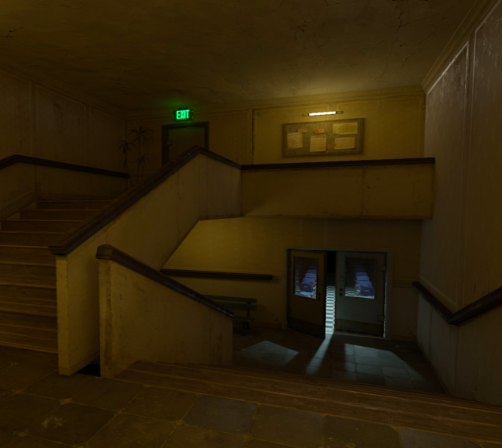
Figure 8. Liminal Stairway Space, Anonymous.25
Thus, each image of a liminal space tends to preserve a particular set of sensations that cannot be transferred to other liminal spaces or to other people. While one person may fantasize about physically finding themselves in a particular liminal space, another may experience the same space as gloomy, sinister, and wholly undesirable.26
Having established these four decisive points for elucidating the idiosyncratic character of liminal spaces, we can argue that together they provide indispensable coordinates for understanding the artistic phenomenon under examination.
Having reviewed these points, the following subsection will examine several Internet aesthetics that are closely connected to liminal spaces. We will also address the question of nostalgia in relation to these aesthetics, highlighting the recurring presence of this emotion and connecting it to the central problem of our research.
2. Nostalgia and Internet Aesthetics
Now that we have presented the origins and context of liminal spaces and dissected the different elements present in their aesthetic, it is time to bring this subject into alignment with the central thread of this research. To do so, we will analyze nostalgia in relation to liminal spaces under late capitalism. In light of this phenomenon, we will also introduce some of the principal Internet aesthetics that, as noted above, are closely related to liminal spaces. This will allow us to better understand the sociocultural context in which this movement emerged, since—although we have focused specifically on liminal spaces—nostalgia is in fact embedded in a wide range of cultural productions of our time.
The first point to bear in mind is that nostalgia is intrinsic to these different aesthetics; the intention to evoke nostalgia, and the manner in which each aesthetic does so, varies in significant ways. It is also important to note that although these aesthetics may share certain concrete qualities—such as nostalgia or the evocation of particular atmospheres—they differ in the visual and conceptual elements they explore and foreground. At the same time, these aesthetics are often intersectional: a single image may belong to, or be closely related to, another similar style.
The first Internet aesthetic we would like to mention is Vaporwave. A pioneering aesthetic dating from the early 2010s, it is not a spatial aesthetic—in the sense of being exclusively concerned with spaces—but it has had considerable influence on subsequent aesthetics. Unlike the others, it did not remain confined to the visual medium; it also developed into a musical genre bearing the same name and intentions. Indeed, Vaporwave music likewise attempts to convey a “return to the future.” It is ghostly music that recovers beats from the 1980s and 1990s and plays with mechanical sounds—such as the crackle of vinyl or a distorted VHS recording—in an attempt to resurrect an experience that was once perceived as futuristic. The philosopher who has worked most extensively on this subject, Grafton Tanner, describes it as follows:
Vaporwave is an artistic style that seeks to reorganize our relationship with electronic media, forcing us to recognize the unfamiliarity of ubiquitous technology. […]
Vaporwave music tends to emphasize the unsettling character of glitches through repetition and audio effects such as distortion, pitch shifts, and compression.27
The Vaporwave aesthetic emerges from a paradoxical mixture ranging from satire to an ode to consumer society and its cultural products.28 Vaporwave retrieves from the collective imaginary certain logos, devices, and elements closely associated with the 1990s and digitization. Its aim is to simulate a nostalgic return to that period while simultaneously offering a cultural critique “of the rapid pace of technological advancement and the commodification of the past.”29
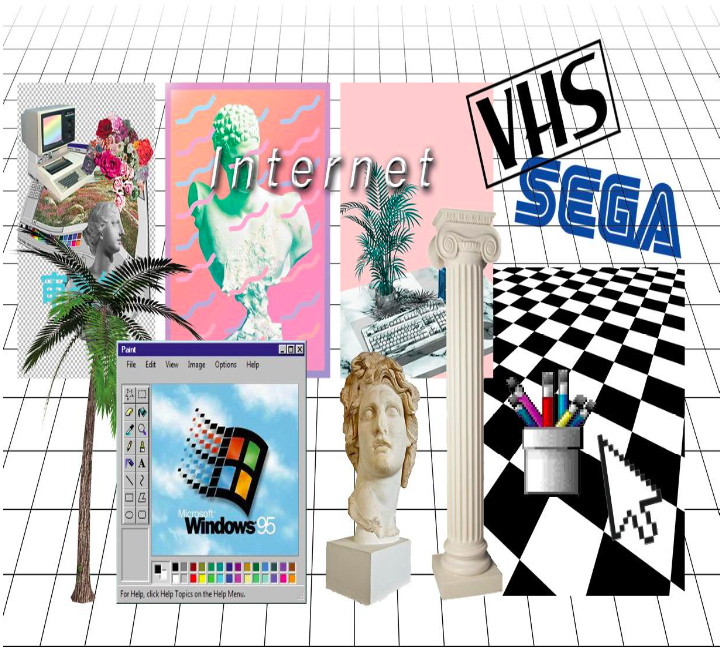
Figure 9. Vaporwave Image I, Anonymous.30

Figure 10. Vaporwave Image II, Anonymous.31
In this aesthetic, images are overloaded with cultural artifacts from the past: logos such as Windows 95, PlayStation 1, Internet Explorer, and so forth. All of this produces a kind of horror vacui of decontextualized images: a form of retrofuturism combining pastel colors, 1990s pop elements, and Greek busts that disorient the viewer in this ambiguous gaze toward both past and future.
Regarding Vaporwave music,32 which pursues the same objective as its visual aesthetic, ALT236 writes:
The music often sounds as though it were playing in a shopping mall. This approach consists of manipulating fragments of sound from the past and damaging them in such a way that an unexpected modern nostalgia emerges. […] It is also often somewhat dystopian or critical of consumer society, since these atmospheres transport us back to a form of capitalist golden age.33
Although Vaporwave diverges from liminal spaces—and from the aesthetics discussed below—in many respects, it is indispensable for understanding these other Internet aesthetics. Its relevance to certain critical motifs and formal elements resonates throughout subsequent Internet aesthetics. Ultimately, Vaporwave was the pioneering aesthetic to insist upon nostalgia for our immediate cultural past. It combined this with a curious mixture of critique and celebration of late capitalism, insofar as late capitalism constitutes the lived context of Western subjects.
Having discussed Vaporwave, we will now present only some of the aesthetics that are closely related to liminal spaces, since there are dozens of variations and nuances.
The first is Dreamcore, which, as its name suggests, seeks to evoke a dreamlike atmosphere. Dreamcore attempts to represent unconscious imagery, with an explicit surrealist inspiration and intention. We might even describe it as a form of “neo-surrealism,” insofar as it incorporates distortions of reality and implausible elements while simultaneously combining them with landscapes and locations that are both bizarre and hypnotic.
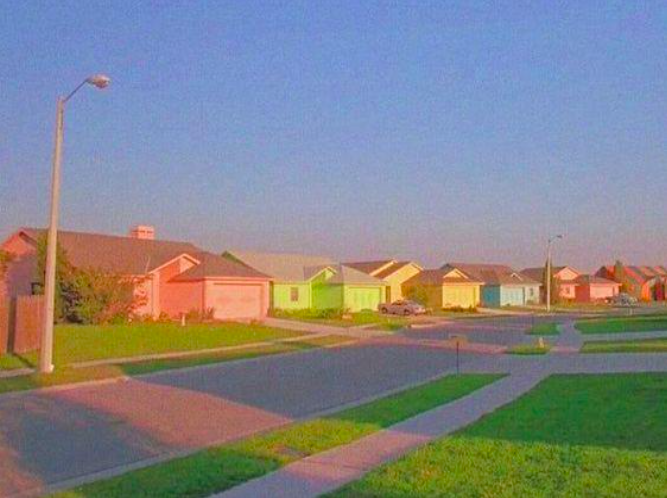
Figure 11. Dreamcore Image, Anonymous.34
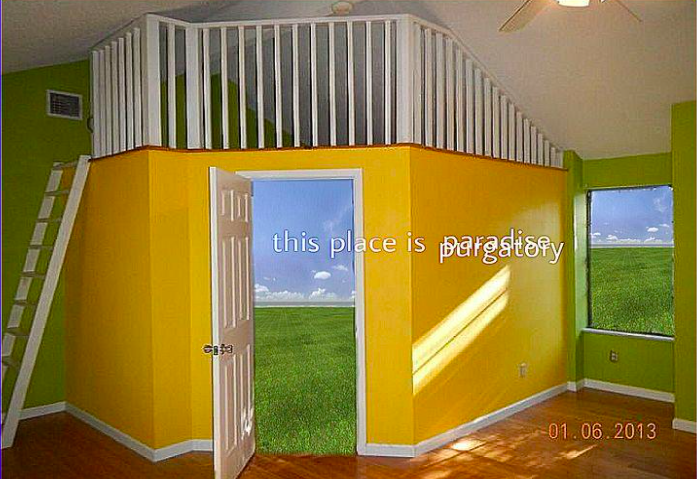
Figure 12. This Place Is Paradise/Purgatory, Anonymous.35
Unlike stricto sensu liminal spaces, Dreamcore does include open spaces and sometimes even landscapes infused with an artificial or exaggerated form of nature. Just as these images may depict pleasant and dreamlike environments, they can also portray disturbing places characteristic of nightmares. Pastel colors are sometimes employed, and in certain cases evocative texts may be incorporated.
Second, Weirdcore—weird being the English word for “strange”—is another Internet aesthetic related to Dreamcore and liminal spaces, but it tends to emphasize an uncomfortable sense of strangeness in both atmosphere and context. If liminal spaces are characterized by being out of context, and the bizarre context of Dreamcore is that of a dream, Weirdcore allows this ambiguity to lead nowhere. Images are often of low quality and possess a surreal appearance. The underlying intention, however, is to create a sense of estrangement in which the viewer cannot fully comprehend what is being shown. Visual elements that challenge logic and expectations are employed, often producing feelings of discomfort and nostalgia. These images may also be accompanied by text which, rather than helping to situate the viewer, plunges them into an even greater absence of meaning.
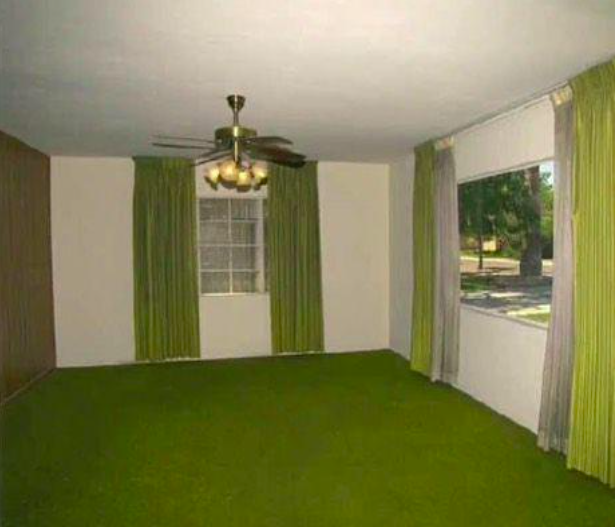
Figure 13. Weirdcore Image I, Anonymous.36
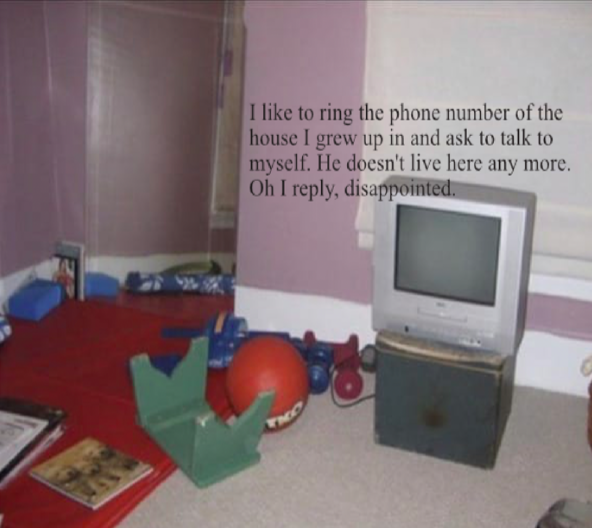
Figure 14. Weirdcore Image II, Anonymous.37
Having introduced some of the different Internet aesthetics, we can now turn to the one that most directly culminates in the issue under consideration: Nostalgiacore. As its name suggests, this aesthetic foregrounds nostalgia above all else. The preceding aesthetics—including liminal spaces—produce nostalgia indirectly, whereas Nostalgiacore makes it central. The spaces it presents are generally imbued with a childlike atmosphere, evoking childhood through objects or innocent memories. They are often enclosed spaces, although open spaces also appear. Bright and striking colors, recreational locations, and warm atmospheres are characteristic: settings typical of the 1990s and the first decade of the twenty-first century, an aesthetic that unmistakably appeals to the childhood of Millennials and Generation Z.
Figure 15. Nostalgiacore Image I, Anonymous.38
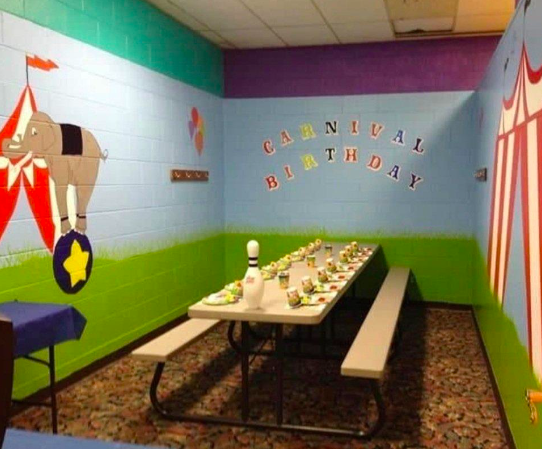
Figure 16. Nostalgiacore Image II, Anonymous.39
As we have shown, both liminal spaces and many Internet aesthetics constitute a continual invitation to nostalgia. Beyond the distinctions we have established in order to differentiate and relate them, we can see that they develop and intersect within the same artistic and cultural context. A sense of unreality is present across these aesthetics; they all combine the absence of people with locations that are both inhospitable and strangely comforting. Moreover, many of them are derivatives of liminal spaces that incorporate elements of context, surrealism, or strangeness.
The fact that all these aesthetics compulsively express a nostalgic aura is neither accidental nor insignificant. Ultimately, these aesthetics go viral and are shared by hundreds of thousands of people; they are far from negligible within cyberculture. If nostalgia is disproportionately present among younger generations, this can be understood as a latent symptom of our time, and the interpretation of liminal spaces allows us to account for it. We cannot say with certainty what this symptom is telling us, but through nostalgia we can observe an imperative need to look backward with longing: to regard the past as a comfort zone, dreamlike places as windows into other realities, all under the fleeting and illusory sensation of recovering a lost object.
The success of these aesthetics lies in their evocative power. They provide a breath of fresh air and trigger an intense awakening of sensations. In fact, this nostalgia may be evoked by things we have never experienced or spaces we have never inhabited—although they may sometimes unconsciously transport us back to familiar places. This peculiar phenomenon, the experience of nostalgia for something one has never lived through, has also been given a name in The Dictionary of Obscure Sorrows: anemoia. The following passage describes precisely what it entails:
Anemoia is defined, according to various accounts and publications, as nostalgia for something one has not experienced, for experiences that are not one’s own and are not necessarily even real, but may also be imaginary. It may also relate to a past or future period, the latter being imaginary. In this sense, anemoia is often generated by a stimulus rather than merely by a thought. For example, many people report experiencing it when they listen to music or watch a video and feel compelled to share their emotions.40
Ultimately, these aesthetics awaken, evoke, and simulate the sensation of nostalgia without necessarily depicting something the viewer has experienced. In the case of Vaporwave, this is evident in its fixation on cultural products of the 1990s. But across the different spatial aesthetics we also find, implicitly, a particular sense of tranquility: a pleasurable solitude. Specifically with regard to liminal spaces, Marcel Mensah refers very precisely to the nostalgia they evoke: “Liminal spaces” refer to a range of feelings, images, places, and concepts rooted in what may be called “uncomfortable nostalgia.”41
Ultimately, this nostalgia is often difficult to embrace. Even if we longed to inhabit one of these spaces, it is likely that if the dream were realized, it would soon become a nightmare.
The manifest content of all these aesthetics directly appeals to generations born from the 1980s onward—especially those born between the late 1980s and the early 2000s—and, more specifically, to their childhoods and adolescence. It is difficult to identify a single origin for nostalgia, since although it may afflict us, as we have demonstrated through the arguments presented above, its origins are ultimately multifactorial. What we can say, however, is that technology—with its constant transience and impact upon us—is decisive in shaping the way we interact with and relate to our surroundings. All those obsolete cultural products that formed part of our lives and were once cherished become memories that mark us and may, over time, become objects of nostalgia. As Tracy Draws observes:
Digital technology was relatively new when I was a child. I still remember the first smartphones my parents used, when they were about the size of the palm of a hand and unlocking the screen required sliding a button rather than entering a password. Because digital technology was still in its early stages of development, children were more likely to spend time outdoors and interact with their physical surroundings.
[…] Generation Z is probably the last generation to grow up with a childhood free from the influence of digital technology.42
Ultimately, that liminal phase between the analog and the digital was a romantic period with which many young people today identify through this dual condition: neither entirely analog nor entirely digital. There is no longer such a choice. Digitization has progressively become the field of action of our societies. If we add to this the growing uncertainty surrounding the future—labor precarity, the threat of wars and pandemics, artificial intelligence, social polarization, ecological and economic crises, and so forth—we have two significant grounds for the nostalgic symptom. Faced with this sociopolitical landscape, retreating into simplicity and idealizing the past can provide comfort like a fireplace on a rainy day.
Cecilio Paniagua writes the following about the psychology of nostalgia:
Periods, places, and people are often longed for in distorted ways because the purpose of nostalgia is not historical fidelity, but the induction of self-esteem and feelings of security capable of counteracting the anxiety produced by the threatening awareness of lovelessness, helplessness, and our finitude.43
Thus, nostalgia emerges as a response to our present way of life, as a means of counteracting an uncertain future, even if the symptom also contains a form of enjoyment, a guilty pleasure derived from remembering that virtual past.
The truth is that our culture’s fixation on nostalgia expresses something larger than ourselves; it reveals our learned helplessness in the face of the overwhelming acceleration of technology, social change, and the pace of life.44 As Jean Paul Richter put it, “memory is the only paradise from which we cannot be banished.”45 Faced with the persistent speed of change and the instability of our historical context, nostalgia becomes our way of resisting banishment from our home: banishment from temporality, from the awareness that nothing is as it once was, nor will it remain as it is now.
Technology gives us the tools to remember our past and, at the same time, gives us reasons to feel nostalgic. We reconnect with our immediate past and forget that our present will one day itself become an object of nostalgia. As Tanner puts it, “cultural nostalgia becomes stronger as our technological ascendancy increases. We yearn for analog technology and readily consume the myth that we can safely hide within the pre-digital warmth of the media technologies of the past.”46
3. Non-Places as the Archetype of Liminal Spaces
In the early 1990s, the anthropologist Marc Augé published his renowned book Non-lieux: Introduction à une anthropologie de la surmodernité. In this work, Augé sought to understand contemporary culture and society from an anthropological perspective. He centered his analysis on Western society itself, moving away from the traditional anthropological gaze that examines foreign cultures from an external position. What is most relevant to our research is his analysis of what he calls non-places. As we shall see, non-places have a close—though unintended—relationship with liminal spaces. Our comparison of these two phenomena aims to identify the consequences arising from this relationship, given that non-places constitute an explicit theoretical antecedent.
The first point to consider is that Augé contrasts the concept of the non-place with the anthropological concept of “place.” Ultimately, the non-place formally opposes the defining characteristics of anthropological place. However, it should be emphasized that the term “non-place” must not be understood as the negation of a physical space. It is not an abstraction; the non-place is also an existing space.47 Augé adopts Michel de Certeau’s definition48 in addressing the question of anthropological place. As Augé writes:
Michel de Certeau sees in place, whatever it may be, the order “according to which elements are distributed in their relations of coexistence” and, while he rules out the possibility of two things occupying the same “place,” he allows each element of a place to be beside the others, in its own “site”; he defines “place” as an “instantaneous configuration of positions” […] Historical, finally, place necessarily becomes so from the moment that, combining identity and relation, it is defined by a minimal degree of stability.49
Place, beyond being a physical arrangement, is also understood in anthropology as a space endowed with history, containing a diversity of shared cultural elements that root individuals in that place. This is not the case with non-places,50 which are characterized by anonymity; they do not serve to foster social bonds or establish relationships. They also lack identity and history. Ian Buchanan identifies several relevant points concerning the opposition between place and non-place:
The non-place is defined in contrast to place, a standard anthropological concept meaning a “concrete and symbolic construction of space.” As this vague definition suggests, and as Augé helpfully reminds us, place is an anthropological tool, the property of its inventor rather than of the social group said to inhabit it. What it does is name a relational system that integrates a people with a region or territory, its past with a present still to be forged, its sense of itself with a future they are determined to live.51
The force of the concept of the non-place lies precisely in this distinction: unlike place, the non-place does not root individuals and is ineffective as a site for establishing social bonds. It is a space lacking an identity of its own beyond identification through functionality. Late capitalism is characterized precisely by its capacity to systematically produce non-places. Ultimately, non-places are the paradigmatic spaces of late capitalism: spaces encoded so that their use is determined by the fulfillment of a specific function. The particularity associated with place is extinguished in the non-place. Non-places are replaceable spaces; they are not missed for what they are but understood as spatial products with specific functions and uses. For example, one does not miss a supermarket because it has been relocated; what is regretted, if anything, is the convenience of having it near one’s home or some other banal consideration. Non-places dissolve the sense of belonging by homogenizing places and transforming them into non-places. They are an unprecedented phenomenon, proper and characteristic of late capitalism. Augé argues:
Non-places are the measure of our time, a measure that might be quantified by adding, after a few conversions between area, volume, and distance, the air routes, railways, motorways, and mobile habitations called “means of transport” (airplanes, trains, cars), airports and railway stations, aerospace stations, large hotel chains, leisure parks, supermarkets,…52
Once we consider the concept of the non-place through its distinctions from place, we uncover the fact that our societies are filled with non-places we had assumed to be places. Applying this conceptual tool, we find that our social reality is divided by an urban dichotomy that alters the way we relate to space. Non-places transform the way we conceive of places because they appear as impersonal spaces that induce isolation and loss of identity. They form part of the circuit through which the “user-citizen” moves across the city in pursuit of a specific service, at the cost of the human contact characteristic of traditional places. In the following passage, Augé offers a vivid representation of the coldness implicit in non-places, the spaces that compose our societies under late capitalism:
Large supermarkets in which the customer moves silently, consults labels, weighs vegetables or fruit on a machine that indicates the price along with the weight, then hands a credit card to a young woman who is also silent, or not very talkative, who passes each item through a decoding machine before checking whether the credit card is valid. A more direct but even more silent dialogue is the one each credit-card holder conducts with the dispensing machine into which the card is inserted, whose screen transmits instructions that are generally encouraging but sometimes constitute genuine admonitions (“Card inserted incorrectly,” “Remove your card,” “Read the instructions carefully”). All the interpellations emanating from roads, shopping centers, or the bank security service on the corner of our street address each of us simultaneously and indifferently (“Thank you for your visit,” “Have a good journey,” “Thank you for your trust”), regardless of whom they address: they are what manufacture the “average man,” defined as a user of the road, commercial, or banking system. These interpellations construct him and eventually individualize him.53
The passage above faithfully depicts the psychic fragmentation characteristic of late capitalism. If non-places are spaces of anonymity, this is because genuine social relations are not generated within them; only commercial relations are. Both those who purchase services or consume and those who work there occupy assigned roles. Everyone with whom we share such a space is a stranger acting according to the same user assumptions as ourselves. In this type of “place,” we are surrounded by anonymous individuals who, like us, are governed by the same rules for using the space. Thus, “the passenger in non-places finds his identity only at customs, at the toll booth, or at the checkout. While waiting, he obeys the same code as everyone else, receives the same messages, responds to the same appeals. The space of the non-place creates neither singular identity nor relation, but solitude and similitude.”54
As we have developed above, non-places appear in our time as the most emblematic urban, architectural, social, and functional devices of late capitalism. Following our presentation of liminal spaces in the preceding section, and our discussion of late capitalism in the first part of this research, the correlation that can be drawn between the two becomes apparent. Moreover, the concept of the non-place provides us with a bridge for explaining and understanding liminal spaces more deeply. We will therefore develop several aspects that allow us to approach both questions from a common perspective. After all, as previously stated, non-places constitute an indispensable conceptual antecedent for the study of liminal spaces. As ALT236 writes in Liminal: Les nouveaux espaces de l’angoisse:
“Liminal spaces” have had another academic designation since at least 1992, thanks to the anthropologist Marc Augé. In an essay entitled Non-lieux. Introduction à une anthropologie de la surmodernité, Augé theorized about liminal spaces thirty years ahead of their time and chose to call them “non-places.”55
ALT236 is not mistaken in assimilating non-places to liminal spaces, since they constitute a spontaneous antecedent to the artistic phenomenon. Nevertheless, it is necessary to recognize that although non-places can readily be associated with liminal spaces, there are also significant differences between them. By recognizing these asymmetries, we can better delineate the convergences that unite them, since ultimately we are comparing an anthropological concept with an artistic phenomenon—the former serving as an interpretive key to the latter. We can therefore assemble the necessary points to reach the thesis that gives this section its title: liminal spaces are archetypically non-places. More strongly, we wish to advance the following thesis: every liminal space is a non-place. However, not every non-place is a liminal space. Why? As we established above—in particular in the subsection 4.1. Characteristics of Liminal Spaces—the sine qua non conditions of liminal spaces are:
- Absence of people.
- Places frequently traversed by people.
- Liminality.
- The elicitation of specific emotions.
As previously argued, all four parameters must converge in order for us to speak of a liminal space; otherwise, it would not qualify as such. Non-places, by contrast, correspond to a broader anthropological experience characteristic of late capitalism. We will therefore examine these four aspects in contrast with non-places.
With regard to the first two points—1) absence of people and 2) places frequently traversed by people—the absence of people is a central feature of liminal spaces. A non-place, however, may be encountered either with or without people, and this does not affect its status as a non-place. A liminal space filled with people would cease to be liminal, whereas a non-place filled with people would simply be a non-place in its purest form. Conversely, an empty non-place could become a liminal space if certain conditions were met in the process of capturing and editing an image. We can see that prototypical non-places correspond to spaces constantly represented in images of liminal spaces—shopping malls, airports, supermarkets, and so forth. Moreover, we argue that the evocative power of liminal spaces lies precisely in the absence of people, which is what kenopsia defines. After all, the non-place is closely associated with massification, with anonymous spaces occupied by masses of unknown individuals. The impact of these images lies in simulating the fictitious, in imagining not the impossible but the improbable. It is a situation that appears to be a cultural contradiction, but not a logical contradiction. It is difficult for us to imagine a completely empty shopping mall or airport because their functionality and very conditions of possibility depend upon their use for the movement of masses. If non-places are so readily assimilated to liminal spaces, it is precisely because liminal spaces are emptied non-places. When subjects disappear, what is characteristic of the non-place is deactivated, allowing what is proper to the liminal space to emerge.
This transforms the non-place into an absurd backdrop, like a life-size model or the set of a Hollywood film. Non-places represent the spaces of late capitalism, spaces that tend to be fluid and dynamic because of the movement of masses. Liminal spaces, by contrast, are disturbingly static: the movement characteristic of these places appears suspended, freezing the field of action. A related phenomenon, common in the United States, is that of so-called dead malls56: shopping malls that fell into disuse and were eventually abandoned. Walking alone through the vast, deserted premises of an abandoned shopping mall may be the experience that most closely approximates encountering a liminal space in person.
With regard to the third point—3) liminality—we can argue that liminality is a characteristic shared by both liminal spaces and non-places. The fact that they are zones of passage and fleeting stays establishes a connection between them. Thus, the liminality evident in liminal spaces is also shared by non-places. Nevertheless, exceptions can arise, since a non-place per se is not necessarily liminal but may tend toward liminality through the way it is used. It is also possible to find non-places possessing the properties of 1) and 2) without displaying liminality in their use. For example, non-places that function as means of transportation—trains, airplanes, buses, and so forth—are not commonly used as settings for images of liminal spaces. Most likely, this is because, although their use is transitory, it is static: one spends the time sitting in one’s seat. It is not a zone one traverses in passing; rather, it is a space through which one is transported.57
The fourth and final point—4) the elicitation of specific emotions—may be one of the most decisive characteristics in distinguishing liminal spaces from non-places. Ultimately, aspects 1), 2), and 3) can be understood as the conditions that trigger liminal spaces, whereas 4) is the effect they produce. In this respect, the principal difference between non-places and liminal spaces is that the former do not necessarily produce, and normally do not produce, these sensations; nor is this their purpose. This reveals why photographing a non-place does not necessarily produce the effect of a liminal space: the conditions discussed above must be present. At the same time, an image of a liminal space may be created “simply”: one need only be in the right place at the right time and capable of capturing it.
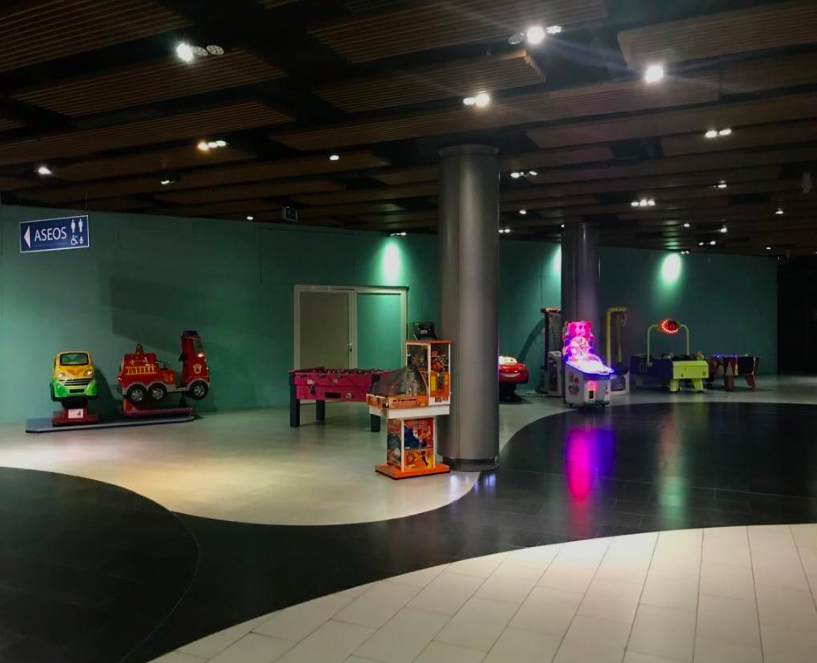
Figure 17. Liminal Space at the Campanar Market in Valencia, photograph by the author.58
Nevertheless, we traverse dozens of non-places every day without necessarily perceiving the characteristics identified above. Moreover, we encounter an extraordinary paradox concerning the connection between liminal spaces and nostalgia. As we have argued throughout this section, liminal spaces are always non-places. Yet non-places are characterized, in practice, by lacking identity and historicity. This raises a striking question: how can one feel nostalgia for a space to which one is not attached?59 If, as we have argued, all liminal spaces are non-places, how can a space that is normally experienced through detachment evoke feelings of nostalgia? We will have to suspend this question until the next section.
In summary, the arguments presented allow us to deduce that liminal spaces are formally non-places. In other words, every liminal space is a non-place, although not every non-place is a liminal space. We assume that the concept of the non-place refers to a fundamental anthropological reality in contemporary societies, whereas liminal spaces emerge as an artistic phenomenon that finds its reflection in non-places. Liminal spaces arise from the creativity of Internet “user-artists” and, at the same time, are represented through non-places insofar as the latter constitute their necessary condition. From this, we can deduce a fifth point:
5) A liminal space must be a non-place.
For the reasons outlined above, we can assert that the non-place is the archetype of the liminal space. A liminal space, therefore, can never be created from a church, nor from a beach or a mountain. Augé’s analysis thus acquires particular relevance when applied to liminal spaces, making non-places an indispensable condition for their existence.
4. The Production of Space under Late Capitalism
At this point, we have analyzed and developed the different dimensions of nostalgia and liminal spaces under late capitalism. In this final section, serving as both a conclusion and a bridge between the various themes examined throughout this research, we will address the production of space from the perspective of Henri Lefebvre. Lefebvre is particularly relevant because of his ability to illuminate the question of space within the capitalist system, demonstrating that space is not reducible to a mere container or transcendental category, but should instead be understood as a social or cultural product.
Space under late capitalism is the product of political, legal, economic, and social determinants. Selecting an urban plan, a specific function, and a code governing use and misuse means producing a space, directing it toward a specific end, and transforming a neutral space into one inscribed by a normative and prescriptive code. Space, then, is not neutral under late capitalism. On the contrary, every space entails a semiology governed by a set of partially concealed motivations. Understanding space as a product has profound sociological and ontological implications, since it ceases to be an aseptic aggregate and becomes a central component in the formation of all kinds of social structures and institutions. Lefebvre writes:
Space is never produced in the same way as a kilogram of sugar or a meter of cloth. It is not merely an aggregate of the places and sites of those products: sugar, wheat, cloth, iron. Is it produced as a superstructure? No; it would be more accurate to say that it is the condition or result of social superstructures: the State and each of the institutions composing it require their own spaces. […] Social space manifests its polyvalence, its “reality” as both formal and material. As a product that is used and consumed, it is also a means of production: networks of exchange, flows of raw materials and energy that configure space and are themselves determined by it.60
Consequently, understanding space as a product also means understanding it as an effect of interests and structures that determine it to fulfill a series of conditions. Space is not merely a receptacle for objects and relations between individuals; it is not a tabula rasa filled with things arbitrarily. Nor is it innocuous, since beneath its apparent everydayness it conceals a series of codes that direct its social mechanisms. Lefebvre elaborates extensively on the coding of space and the ways in which it is conditioned:
The injunction is not the sign. The injunction is the action that unfolds in this space, and space prescribes by selecting which activity may take place, although this is a limited decision. Space orders insofar as it implies an order (and, in that sense, also a certain disorder). Just as decency implies indecency, and the scene implies the thing concealed by the obscene. Interpretation comes afterward, as an addition. Space orders bodies, prescribes or prohibits gestures, paths, and routes. It is produced for this purpose; this is its purpose and its meaning.61
Thus, according to Lefebvre’s analysis, space is another product of our culture: just as socks and mattresses are produced, spaces are also produced. Yet the production of consumer objects is not the same as the production of space.62 The production of space entails a multiplicity of dimensions that intervene in and regulate the everyday lives of user-citizens.
Ultimately, space is not limited to being a product; it also involves production itself. Its status as a product is more multidimensional than that of an ordinary manufactured object. Space entails the social practice of users, brings individuals together, and structures the ways in which they act and relate through the conditions imposed by the spatial framework that contains them. Thus, although space is produced and is itself a product, it is not a conventional product. It is a product that sustains the production of other products while, above all, maintaining the framework of action within which social relations are produced. As Lefebvre argues:
Social space is not a thing among things, a product among products: rather, it envelops the things produced and encompasses their relations in their coexistence and simultaneity, in their relative order and/or disorder. […] As the effect of past actions, social space permits certain actions to occur, suggests some and prohibits others. Among these actions, some belong to the universe of production, while others belong to that of consumption (that is, the enjoyment of products). Social space implies multiple forms of knowledge.63
Our use of Lefebvre’s analysis is not primarily intended to provide a detailed sociological analysis of space. Rather, we invoke this author to demonstrate how space also constitutes a cultural product. This fact has consequences for our research because, as analyzed in previous sections, nostalgia, as a social symptom, is a product of the conditions generated by late capitalism in its production of cultural products. Until now, our analysis has focused on nostalgia generated by obvious cultural products, particularly artistic productions—music, film, or video games—but also other cultural artifacts such as technological devices and objects from our immediate past. Yet if, as we have argued, space constitutes another product within the range of productions of late capitalism, then nostalgia can likewise be enabled by space insofar as space itself is a cultural production.
Previously, we analyzed cultural products that were primarily objects, whether tangible or intangible. In speaking of spaces, we are pointing to a non-objectual cultural product: a framework for action, a container of experiences, and a place with specific functions. Thus, returning to the question raised in the previous section concerning non-places, how is it possible for a space ordinarily experienced through detachment to evoke nostalgia?
We believe that the non-place, like every cultural product and every experiential device, is potentially a trigger for individual nostalgia. After all, Augé is correct in noting that non-places do not establish roots; they are places that vary little regardless of where one is located. An airport in Spain will, for practical purposes, resemble one in Japan. Yet regardless of the fact that spaces themselves may not provide a strong sense of personal or identitarian attachment, we believe that the cultural product can produce nostalgia not so much because of the space itself but insofar as it constitutes a physical and normative framework for experiences. Ultimately, if one grows attached to something, it is because one has subjectively developed an emotional involvement with it; the particular relationship one establishes with things crystallizes the possibility of nostalgia.64
This is not intended as an exhaustive explanation of the problem addressed in this research, which remains fundamentally unresolved. Let us remember that nostalgia often derives from things we have never experienced: anemoia. What is striking is that liminal spaces represent everyday places, spaces proper to late capitalism that under ordinary circumstances would produce indifference. Yet if we attend to the particularities of the artistic phenomenon, together with the assumption that these spaces form part of our collective imaginary, it becomes essential to understand space as a cultural product. In this way, spaces, insofar as they constitute segments of our lived experiences, also enable nostalgia. Space is the contour that makes experience possible; it conditions experience both formally and materially and therefore falls within the operative range of late capitalism, within the engine of its cultural logic.65
If we reconsider more dispassionately the possibility that the spaces of capitalism—and their most conspicuous representation, liminal spaces—can themselves become objects of nostalgia, the proposition is ultimately not as strange as it may appear. It is true that we have no firm attachment to them and that our cultural tradition and identity do not revolve around the non-places that surround us. But it would likewise be false to deny their power and presence in our lives, including the affection and nostalgia they may inspire, even if only because of the experiences that have colored our lives within them, despite their character as cold and ordinary spaces. Returning to Lefebvre:
The user’s space is lived, not represented (or conceived). In comparison with the abstract space of experts (architects, urban planners, planners), the space of users’ everyday activities is a concrete space. That is to say, a subjective one. A space of “subjects,” rather than calculations; a space of representation rooted in childhood, with its crises, achievements, and shortcomings. Lived space bears the imprint of the conflict between inevitable, prolonged, and difficult maturity and the immaturity that leaves its initial sources and reserves intact.66
Ultimately, the spaces surrounding us are the spaces of our experience. They are physical spaces, but also temporal ones: childhood, adolescence, adulthood, and so forth. Every stage of life is traversed through spaces, and therefore non-places are also lived by individuals. To deny nostalgia to the spaces of late capitalism would therefore be absurd. At the end of the day, much of what surrounds us is a cultural production and, consequently, something contingent in our lives. As Hermann Hesse beautifully expressed it, “I came to recognize chance once again as destiny, and the ruins of my life as a heavenly fragment.”67 We long for what we long for because of how it was; although it could probably have been very different, it is cherished precisely because it was that way and not another.
Conclusion
So it is with our past. It is a waste of effort to try to evoke it, and futile to attempt to summon it through our intelligence. It lies hidden beyond its domains and its reach, in some material object (in the sensation that such a material object would give us) of which we are unaware. And it depends upon chance whether we encounter that object before death overtakes us, or whether we never encounter it at all.
— Marcel Proust68
Throughout this trilogy on the correlogram between capitalism, nostalgia, and liminal spaces, we have sought to address a wide range of themes, problems, and authors. This succession of positions and problems aims to identify a social reality and demonstrate how the horizon of our forms of life constitutes a constant challenge. Our relationship with the world, our context, and our society is transformed through continuous change, and these changes in turn reshape our environment and worldview. If nostalgia, as we saw in the first chapter, evolved from a pathology into an emotion, this was primarily due to its normalization within our lives. Yet when an emotion ceases to be occasional and becomes widespread and intergenerational, we can say that its persistent presence constitutes a symptom—a social symptom.
We believe that we have provided sufficient grounds to demonstrate that this reality is evident and that this symptom is generalized among individuals, beyond the temperament of each person. One of the issues at stake, or one of the consequences suggested by this context, is the inescapable correlation between nostalgia and late capitalism.
We can argue that our socioeconomic system establishes the conditions of possibility for the growing production and reproduction of nostalgia among individuals. This occurs both through so-called retromarketing—strategies that invoke cultural products of the past in order to generate sales—and through more collateral processes unfolding from the cultural logic of late capitalism. The latter, which have been the focus of this research because of their particular relevance, are structural aspects insofar as they are enabled by the system itself, as a surplus generated by it. This is nostalgia that is not deliberately produced but emerges as a social symptom, as a residual effect produced in individuals through the internal processes of the system’s logic.
Throughout this trilogy, we have discussed how nostalgia appears as a growing tendency in response to the consumption of cultural products from our immediate past. This obsession may arise from a search for tranquility, from a desire for more intense moments, or from the warmth and exceptional character of those cultural products. We have also seen how technological advances influence our lives and challenge our ways of seeing the world. Given our capacity to access memories in the form of virtual data, we can recall everything that has been part of our lives as individuals or our history as a society. Any means of reconnecting with our past replenishes the details that oblivion had concealed. This permanent possibility of looking backward invites nostalgia, a fleeting desire for the past that can obscure our vision as we project ourselves toward the future.
Against this backdrop, having established late capitalism as the context enabling the symptom, and cultural products as generators of nostalgia through individuals’ emotional involvement with them, we argue that liminal spaces constitute an artistic phenomenon that places nostalgia at the center of its identity, something demonstrated by the public’s response. Liminal spaces, like many other Internet aesthetics and artistic genres of recent years, emerge as a response to—or perhaps as an emotional demand for—nostalgia.
Liminal spaces are not a critique of nostalgia itself; at best, they are monuments to nostalgia, devices that catalyze nostalgic sentiment within the context of late capitalism. If we understand liminal spaces for what they are—specifically, a form of social media art—we can see that their viralization and expansion occur under conditions very different from those of other historical artistic movements or avant-gardes, which were considerably more elitist in their access and dissemination to a mass audience. If liminal spaces have emerged as a mass phenomenon on social networks, it is because they reflect a symptom characteristic of our society under late capitalism. Liminal spaces appeal to people’s nostalgia, allowing viewers to see in them something that reconnects them with their nostalgic dimension.
We could conclude this trilogy by describing the process as follows: individuals subjectively tend toward nostalgia under specific historical conditions that foster and enable it, and nostalgia therefore emerges as a prevailing social symptom. Consequently, liminal spaces and Internet aesthetics reveal themselves as expressions of this nostalgia, as its sublimation through art and, therefore, as the objectification of nostalgia in art through social media.
Never before has nostalgia affected people so broadly, nor has there been such hyperconnectivity as to enable individuals to share and disseminate their own nostalgia as a collective nostalgia. The Internet and technology, with their twofold character, create the conditions both for becoming more nostalgic and for sharing and aesthetically objectifying that nostalgia.
Thus, liminal spaces can be understood as an expression of the nostalgic symptom of late capitalism. Not merely because they deliberately produce nostalgia, but also because they reveal the reasons identified throughout this research. Liminal spaces would therefore manifest not only as an expression of the symptom but also as a nostalgic cultural product.
As we analyzed through Lefebvre, spaces are cultural products of capitalism and, therefore, liminal spaces represent these spaces and, consequently, non-places as well. If our tendency toward nostalgia is positively reinforced particularly through the cultural products of our immediate past—as Reynolds has argued—then the spaces of late capitalism likewise become triggers of nostalgia.
For this reason, liminal spaces and their derivative aesthetics are not merely critiques of late capitalism; paradoxically, they are also glorifications of the cultural products made possible by it. They are images of its spaces presented simultaneously as lost objects and objects of desire.
Unlike conventional cultural products that make us nostalgic because of what they once meant for our lives, liminal spaces are a “self-referential” nostalgic cultural product. That is, they produce nostalgia through themselves and through what they are in themselves; they generate nostalgia intentionally through their basic constitution. They do not make us nostalgic because of what they once meant in our lives; rather, they produce nostalgia particularly through anemoia.
A cultural product that rises as a standard-bearer of nostalgia and, through itself, exemplifies what occurs more generally with nostalgia in other cultural products: the liminal space as a cultural product that symbolizes the nostalgia of all others, representing the “Nostalgia” of all the concrete “nostalgias” of our particular historical context. The nostalgic symptom that is usually a collateral effect—a surplus of cultural products—is, in this case, causa sui. It makes visible and represents, through itself, the generalized nostalgic effect of cultural products upon individuals.
Ultimately, the process we have traced throughout this research unfolds as a succession of complementary events.
First, the cultural logic of late capitalism enables nostalgia as a symptom that crystallizes within its cultural products and intensifies through the constant and incessant transformation of temporality, the pace of life, social forms, and technological development.
Second, once nostalgia, as a social symptom, is produced and reproduced on a mass scale, individuals respond to it and express it through artistic phenomena such as liminal spaces.
Finally, this latter process is harmonized with, or reintroduced into, the immanent circuit of late capitalism insofar as it becomes a nostalgic cultural product. We emphasize the adjective “nostalgic” because, unlike other cultural products that might make us nostalgic accidentally and through the passage of time, liminal spaces begin from nostalgia itself.
This simultaneously reveals an internal critique of the process through which nostalgia is produced, since before nostalgia can arise from the passage of time, nostalgia is already being experienced through what these spaces are. Thus, with the passage of time, a nostalgic gaze directed toward liminal spaces would provide an additional plus of nostalgia, layered upon the nostalgia they already produce per se.
In this way, we return to the point of departure: late capitalism generates nostalgia collaterally through the temporal distance from its cultural products. As time passes, liminal spaces, as another cultural product, will participate in this process as well. Thus, as cultural products, liminal spaces may eventually become objects of nostalgia for many within the collective imaginary.
The difference is that liminal spaces are born as nostalgic cultural products; they emerge as a Trojan horse. They do so because they present themselves as nostalgic from the outset, without requiring the passage of time to become nostalgic in themselves and therefore exercising a form of critique by expressing the nostalgic symptom that extends beyond the images themselves.
Within the immense ocean of cultural products, liminal spaces are reintroduced as that which they critique, pointing toward the cause that made them possible—late capitalism—and toward the effect that prompted their existence: nostalgia.
Bibliography
- Alberti, R. “Canción 8.” Antología poética. Córdoba: Ediciones del Sur, 2003.
- ALT236. Liminal: Les nouveaux espaces de l’angoisse. Paris: Éditions Hoëbeke, 2023.
- Augé, M. Los no lugares. Barcelona: Editorial Gedisa, 2017.
- Baudelaire, C. Las flores del mal. Madrid: Editorial Cátedra, 2006.
- Baudrillard, J. Cultura y simulacro. Barcelona: Editorial Kairós, 1987.
- Baudrillard, J. La sociedad de consumo: Sus mitos, sus estructuras. Madrid: Editorial Siglo XXI, 2012.
- Benjamin, W. La obra de arte en la era de su reproductibilidad técnica. Madrid: Alianza Editorial, 2022.
- Boym, S. El futuro de la nostalgia. Madrid: Editorial A. Machado Libros, 2015.
- Buchanan, I. “Non-Places: Spaces in the Age of Supermodernity.” Social Semiotics, Vol. 9, No. 3, 1999, pp. 393–398.
- Debord, G. La sociedad del espectáculo. Valencia: Editorial Pre-Textos, 2010.
- Deleuze, G. Diferencia y repetición. Buenos Aires: Amorrortu Editores, 2017.
- Deleuze, G. «L’épuisé» en S. Beckett, Quad. Paris: Les Éditions de Minuit, 1992.
- Deleuze, G. & Guattari, F. Mil mesetas: Capitalismo y esquizofrenia. Valencia: Editorial Pre-Textos, 2020.
- Delgado, M. El animal público. Barcelona: Editorial Anagrama, 1999.
- Fisher, M. Los fantasmas de mi vida: Escritos sobre depresión, hauntología y futuros perdidos. Buenos Aires: Editorial Caja Negra, 2019.
- Fisher, M. Realismo capitalista: ¿No hay alternativa?. Buenos Aires: Editorial Caja Negra, 2018.
- Garrocho, D. Sobre la nostalgia: Damnatio memoriae. Madrid: Alianza Editorial, 2019.
- Hesse, H. El lobo estepario. Madrid: Editorial Alianza, 1998.
- Jameson, F. El posmodernismo o la lógica cultural del capitalismo avanzado. Barcelona: Editorial Paidós, 1991.
- Jameson, F. Posmodernismo: La lógica cultural del capitalismo avanzado (Vol. I). Buenos Aires: La Marca Editora, 2015.
- Jameson, F. Posmodernismo: La lógica cultural del capitalismo avanzado (Vol. III). Buenos Aires: La Marca Editora, 2015.
- Lefebvre, H. La producción del espacio. Madrid: Editorial Capitán Swing, 2013.
- Lipovetsky, G. La felicidad paradójica: Ensayo sobre la sociedad de hiperconsumo. Barcelona: Editorial Anagrama, 2007.
- Paniagua, C. “Psicología de la nostalgia.” Dendra Médica: Revista de Humanidades, Vol. 1, No. 1, 2010, pp. 39–48.
- Prada, J. M. “Hacia una teoría del social media art.” Revista de Occidente, No. 465, February 2020, pp. 5–25.
- Proust, M. En busca del tiempo perdido: Por el camino de Swann. Madrid: Alianza Editorial, 2004.
- Reynolds, S. Retromanía: La adicción del pop a su propio pasado. Buenos Aires: Editorial Caja Negra, 2012.
- Rosa, H. Alienación y aceleración: Hacia una teoría crítica de la temporalidad en la modernidad tardía. Madrid: Editorial Katz, 2016.
- Tanner, G. Las horas han perdido su reloj: Las políticas de la nostalgia. Barcelona: Editorial Alpha Decay, 2022.
- Tanner, G. The Circle of the Snake: Nostalgia and Utopia in the Age of Big Tech. Winchester: Zero Books, 2020.
- Tanner, G. Un cadáver balbuceante: El Vaporwave y los fantasmas electrónicos. Barcelona: Editorial Holobionte, 2022.
- Vattimo, G. El fin de la modernidad: Nihilismo y hermenéutica en la cultura posmoderna. Barcelona: Editorial Gedisa, 1987.
Webography
- 4chan. (May 12, 2019). unsettling images. Retrieved May 21, 2024: https://archive.4plebs.org/x/thread/22661164/#22661164
- Aesthetics Wiki. (n.d.). Liminal Space. Retrieved May 21, 2024: https://aesthetics.fandom.com/wiki/Liminal_Space
- Aesthetics Wiki. (n.d.). Vaporwave. Retrieved May 22, 2024: https://aesthetics.fandom.com/wiki/Vaporwave#History
- Debczak, M. (October 14, 2022). Off the Map: Why the Internet Loves Being Creeped Out By Liminal Spaces. Mental Floss. Retrieved May 21, 2024: https://www.mentalfloss.com/posts/why-are-liminal-spaces-creepy
- Draws, T. (January 26, 2024). Nostalgia Aesthetic. Medium. Retrieved May 22, 2024: https://medium.com/@tracydraws/nostalgia-aesthetic-7c671b9b7c8e
- Instituto de Artes del Espectáculo: Universidad de Buenos Aires. (n.d.). Área de Investigaciones en Artes Liminales. Retrieved May 22, 2024: http://iae.institutos.filo.uba.ar/%C3%A1rea-de-investigaciones-en-artes-liminales
- La República. (October 21, 2022). ¿Sientes nostalgia por algo que no viviste? Le llaman anemoia y muchos la experimentan. Retrieved May 23, 2024: https://larepublica.pe/datos-lr/respuestas/2022/10/21/sientes-nostalgia-por-algo-que-no-viviste-le-llaman-anemoia-y-muchos-la-experimentan-emociones-psicologia-asmr-diccionario-youtube-evat
- La Voz de Galicia. (January 22, 2014). ¿Es Dolce Vita un «dead mall»?. Retrieved May 23, 2024: https://www.lavozdegalicia.es/noticia/economia/2014/01/22/dolce-vita-dead-mall/00031390391937111133766.htm
- Mensah, M. (July 18, 2022). Internet Aesthetic Movements: Getting Lost in Liminal Space. Loner Official. Retrieved May 23, 2024: https://www.lonerofficial.com/post/internet-aesthetic-movements-getting-lost-in-liminal-space
- Pitre, J. (November 2, 2022). The Eerie Comfort of Liminal Spaces. The Atlantic. Retrieved May 22, 2024: https://www.theatlantic.com/culture/archive/2022/11/liminal-space-internet-aesthetic/671945/
- Reddit: r/LiminalSpace. (June 7, 2022). You must read this before posting. Retrieved May 22, 2024: https://www.reddit.com/r/LiminalSpace/comments/v6ihmx/you_must_read_this_before_posting/
- Reddit: r/LiminalSpace. (September 6, 2023). Can someone explain Liminal Space like I’m 5?. Retrieved May 22, 2024: https://www.reddit.com/r/LiminalSpace/comments/16b0e3p/comment/jzb0d5g/
- The Dictionary of Obscure Sorrows. (n.d.). kenopsia. Retrieved May 22, 2024: https://www.dictionaryofobscuresorrows.com/post/27720773573/kenopsia
Footnotes
-
Baudelaire, C. “La sima.” Las flores del mal. Madrid: Editorial Cátedra, 2006, p. 569. ↩
-
Aesthetics Wiki. (n.d.). Liminal Space. Retrieved May 21, 2024: https://aesthetics.fandom.com/wiki/Liminal_Space. ↩
-
“Social media art, that set of artistic practices that would take the emerging participatory platforms of Web 2.0 as their specific field of activity. The new forms of online socialization, as well as the logics of the communication model based on ‘user-generated content’ and, more specifically, on the imperative to ‘broadcast yourself,’ would become the essential structuring axes of these new developments in contemporary art,” Prada, J. M. “Hacia una teoría del social media art,” Revista de Occidente, No. 465, February 2020, pp. 5–25. ↩
-
We will consistently use the term “Internet aesthetic,” as this is the common designation for these artistic styles and subcultures that have emerged around image-production movements associated with a particular genre. We will also use “aesthetic” as a shorthand, although we are obviously not referring to aesthetics here as a branch of philosophy. ↩
-
4chan. (May 12, 2019). unsettling images. (Author’s translation). Retrieved May 21, 2024: https://archive.4plebs.org/x/thread/22661164/#22661164. ↩
-
Anonymous. (April 22, 2018). Origen de las Backrooms. 4chan. Retrieved May 21, 2024: https://archive.4plebs.org/x/thread/20663805/#20669208. ↩
-
4chan. (May 12, 2019). unsettling images. (Author’s translation). Retrieved May 21, 2024: https://archive.4plebs.org/x/thread/22661164/#22661164. ↩
-
Strictly speaking, this is a creepypasta, essentially a type of short horror story that is widely shared online. Creepypasta derives from the words creepy and copypasta (an adaptation of “copy-paste”), since these stories are commonly copied and pasted across forums and websites. ↩
-
Anonymous. (n.d.). Espacio liminal supermercado. Pinterest. Retrieved May 22, 2024: https://www.pinterest.es/pin/706502260289509221/. ↩
-
Anonymous. (n.d.). Espacio liminal garaje. Reddit. Retrieved May 22, 2024: https://www.reddit.com/r/LiminalSpace/comments/hqg41k/parking_lot/. ↩
-
Anonymous. (n.d.). Espacio liminal cine. Reddit. Retrieved May 22, 2024: https://www.reddit.com/r/LiminalSpace/comments/il5tif/dying_cinema_in_poznan_poland/. ↩
-
Bibliographic reference missing from the source file provided. ↩
-
Tanner, G. Un cadáver balbuceante: El Vaporwave y los fantasmas electrónicos. Barcelona: Editorial Holobionte, 2022, p. 84. ↩
-
Reddit: r/LiminalSpace. (June 7, 2022). You must read this before posting. Retrieved May 22, 2024: https://www.reddit.com/r/LiminalSpace/comments/v6ihmx/you_must_read_this_before_posting/. ↩
-
Anonymous. (n.d.). Espacio liminal aeropuerto. Pinterest. Retrieved May 22, 2024: https://www.pinterest.es/pin/644085184201362577/. ↩
-
Anonymous. (n.d.). Espacio liminal centro comercial. Reddit. Retrieved May 22, 2024: https://www.reddit.com/r/TheVirginZone/comments/11uzcta/benson_en_los_backrooms/. ↩
-
The Dictionary of Obscure Sorrows is a project initiated by John Koenig with the aim of defining and coining neologisms for emotions not described by ordinary language—in other words, creating new concepts for emotions that had not yet been conceptualized. ↩
-
The Dictionary of Obscure Sorrows. (n.d.). kenopsia. (Author’s translation). Retrieved May 22, 2024: https://www.dictionaryofobscuresorrows.com/post/27720773573/kenopsia. ↩
-
“Its meaning can be traced to the Latin word limen, meaning ‘threshold.’ The liminal or liminary (from the Latin limināris) refers to a zone of passage, a gateway, the origin of a zone of ambiguity in which something ceases to be what it was and may potentially transform into something else,” Instituto de Artes del Espectáculo: Universidad de Buenos Aires. (n.d.). Área de Investigaciones en Artes Liminales. Retrieved May 22, 2024: http://iae.institutos.filo.uba.ar/%C3%A1rea-de-investigaciones-en-artes-liminales. ↩
-
Reddit: r/LiminalSpace. (June 7, 2022). You must read this before posting. (Author’s translation). Retrieved May 22, 2024: https://www.reddit.com/r/LiminalSpace/comments/v6ihmx/you_must_read_this_before_posting/. ↩
-
Wels, H., van der Waal, K., Spiegel, A. & Kamsteeg, F. “Victor Turner and liminality: An introduction.” (Author’s translation). Anthropology Southern Africa, No. 34(1&2), 2011, p. 1. ↩
-
“If liminal spaces have been so successful, it is because the images in this category distill a very particular aesthetic, combining comfort and unease,” ALT236, Liminal: Les nouveaux espaces de l’angoisse. (Author’s translation). Paris: Éditions Hoëbeke, 2023, p. 17. ↩
-
Pitre, J. (November 2, 2022). The Eerie Comfort of Liminal Spaces. (Author’s translation). The Atlantic. Retrieved May 22, 2024: https://www.theatlantic.com/culture/archive/2022/11/liminal-space-internet-aesthetic/671945/. ↩
-
Anonymous. (n.d.). Espacio liminal McDonald’s. [Source as provided in the original manuscript.] ↩
-
Anonymous. (n.d.). Espacio liminal escaleras. [Source as provided in the original manuscript.] ↩
-
[Original note retained conceptually; no separate bibliographic source is provided in the supplied file.] ↩
-
Tanner, G. [Citation corresponding to the passage in the original manuscript.] ↩
-
In a certain sense, Vaporwave is indebted to twentieth-century Pop Art, insofar as it draws inexorably from consumer society and simultaneously celebrates and ironizes it. Beyond these motifs, Vaporwave is original in integrating nostalgia, electronic technology, and the early Internet. Even while drawing upon popular culture, it creates a novel space within the motifs and forms it explores. ↩
-
Aesthetics Wiki. (n.d.). Vaporwave. Retrieved May 22, 2024: https://aesthetics.fandom.com/wiki/Vaporwave#History. ↩
-
Anonymous. (n.d.). Imagen Vaporwave I. Aesthetic Wallpapers. Retrieved May 22, 2024: https://aestheticwallpapers.io/img/674716. ↩
-
Anonymous. (n.d.). Imagen Vaporwave II. Pinterest. Retrieved May 22, 2024: https://www.pinterest.cl/pin/418342252897414108/. ↩
-
For those interested in hearing a Vaporwave track, we might recommend what is perhaps the genre’s most iconic song, “リサフランク420 / 現代のコンピュー,” from the album Floral Shoppe by Macintosh Plus. Source: https://youtu.be/bAgmGZ9iQ2Y?si=zXXAb-cdj0WoiBNI. ↩
-
ALT236, Liminal: Les nouveaux espaces de l’angoisse. (Author’s translation), op. cit., pp. 67–68. ↩
-
Anonymous. (n.d.). Imagen Dreamcore. Aesthetic Wallpapers. Retrieved May 23, 2024: https://aesthetics.fandom.com/wiki/Dreamcore?so=search. ↩
-
Anonymous. (n.d.). This place is paradise/purgatory. Reddit. Retrieved May 23, 2024: https://www.reddit.com/r/dreamcoreaesthetic/comments/zhsnbd/purgatory/. ↩
-
Anonymous. (n.d.). Imagen Weirdcore I. Pinterest. Retrieved May 23, 2024: https://ar.pinterest.com/pin/635289091209803820/. ↩
-
Anonymous. (n.d.). Imagen Weirdcore II. Reddit. Retrieved May 23, 2024: https://www.reddit.com/r/weirdcore/comments/u0ttmw/nostalgia_loop/. ↩
-
Anonymous. (n.d.). Imagen Nostalgiacore I. Pinterest. Retrieved May 23, 2024: https://www.pinterest.es/pin/601723200208236462/. ↩
-
Anonymous. (n.d.). Imagen Nostalgiacore II. Pinterest. Retrieved May 23, 2024: https://www.pinterest.es/pin/406027722661467372/. ↩
-
La República. (October 21, 2022). ¿Sientes nostalgia por algo que no viviste? Le llaman anemoia y muchos la experimentan. Retrieved May 23, 2024: https://larepublica.pe/datos-lr/respuestas/2022/10/21/sientes-nostalgia-por-algo-que-no-viviste-le-llaman-anemoia-y-muchos-la-experimentan-emociones-psicologia-asmr-diccionario-youtube-evat. ↩
-
Mensah, M. (July 18, 2022). Internet Aesthetic Movements: Getting Lost in Liminal Space. (Author’s translation). Loner Official. Retrieved May 23, 2024: https://www.lonerofficial.com/post/internet-aesthetic-movements-getting-lost-in-liminal-space. ↩
-
Draws, T. (January 26, 2024). Nostalgia Aesthetic. (Author’s translation). Medium. Retrieved May 22, 2024: https://medium.com/@tracydraws/nostalgia-aesthetic-7c671b9b7c8e. ↩
-
Paniagua, C. “Psicología de la nostalgia,” op. cit., p. 39. ↩
-
The philosopher and sociologist Hartmut Rosa makes this tripartite distinction particularly revealingly in his work Alienación y aceleración. Rosa examines the problem of acceleration through three spheres in which a pronounced acceleration can be identified across different processes within society. ↩
-
Ibid., p. 40. ↩
-
Tanner, G. Un cadáver balbuceante: El Vaporwave y los fantasmas electrónicos, op. cit., p. 102. ↩
-
“Let us add that, evidently, a non-place exists just as a place does: it never exists in a pure form,” Augé, M., op. cit., p. 84. ↩
-
Michel de Certeau developed the concept of the non-place before Augé; however, Augé gave it greater visibility and analytical utility by framing it within a broader context and expanding upon Certeau’s intuition. ↩
-
Augé, M., op. cit., pp. 59–60. ↩
-
“The non-place is opposed to everything that might resemble an identifying, relational, and historical point: the district; the neighborhood; the village boundary; the public square with its church; the sanctuary or castle; the historical monument… all enclaves associated with a set of social or political potentialities, norms, and prohibitions that collectively seek to domesticate space,” Delgado, M. El animal público. Barcelona: Editorial Anagrama, 1999, p. 40. ↩
-
Buchanan, I. “Non-Places: Spaces in the Age of Supermodernity,” Social Semiotics, Vol. 9, No. 3, 1999, p. 394. ↩
-
Augé, M., op. cit., pp. 84–85. ↩
-
Ibid., pp. 103–104. ↩
-
Ibid., pp. 106–107. ↩
-
ALT236, Liminal: Les nouveaux espaces de l’angoisse. (Author’s translation), op. cit., p. 15. ↩
-
“A dead mall is an abandoned shopping center with a very high proportion of vacant stores or extremely low consumer traffic, which, as a result of these two circumstances, experiences significant deterioration of its facilities,” La Voz de Galicia. (January 22, 2014). ¿Es Dolce Vita un «dead mall»?. Retrieved January 2, 2024: https://www.lavozdegalicia.es/noticia/economia/2014/01/22/dolce-vita-dead-mall/00031390391937111133766.htm. ↩
-
The individual is inside a capsule that transports them rather than moving from one place to another themselves. In my view, this is what sustains the exception: being transported rather than transporting oneself. The same does not apply to airports, railway stations, and similar spaces, where the liminality of the space is combined with movement. ↩
-
Author. (November 8, 2023). Espacio liminal en el Mercado de Campanar de Valencia. Original source. ↩
-
“If a place can be defined as a space of identity, relation, and history, a space that cannot be defined as a space of identity, relation, or history will define a non-place,” Augé, M., op. cit., p. 83. ↩
-
Lefebvre, H. La producción del espacio. Madrid: Editorial Capitán Swing, 2013, p. 141. ↩
-
Ibid., p. 194. ↩
-
“Products? Yes, in a specific sense, particularly because of a quality of globality (not ‘totality’) that ordinary and trivial ‘products’—objects and things, commodities—do not possess (although it is true that produced but ‘segmented’ space and time are exchanged, sold, and purchased like ordinary objects and things),” Ibid., pp. 54–55. ↩
-
Ibid., p. 129. ↩
-
“As soon as a non-place becomes established as a kind of place and then changes its logo or design, familiarity is disrupted and nostalgia may very well enter the picture. We might feel nostalgic for what fast-food restaurants used to look like, for vanished supermarket chains, or even for the former design of social networks,” Tanner, G. Las horas han perdido su reloj: Las políticas de la nostalgia. Barcelona: Editorial Alpha Decay, 2022, p. 57. ↩
-
“Capitalism and neocapitalism have produced abstract space containing the ‘world of commodities,’ its ‘logic,’ and its strategies on a global scale,” Lefebvre, H., op. cit., p. 111. ↩
-
Ibid., p. 395. ↩
-
Hesse, H. El lobo estepario. Madrid: Editorial Alianza, 1998, p. 144. ↩
-
Proust, M. En busca del tiempo perdido: Por el camino de Swann. Madrid: Alianza Editorial, 2004, p. 61. ↩